
"Saatchi hands"
500 article(s) found

Introduction of Costa Rican coffee producing areas with extremely hard beans above 1500 meters above sea level
With fertile volcanic soil and good drainage, Dariga is the first country in Central America to grow coffee and bananas because of its commercial value. Coffee and bananas are the country's main exports. Coffee was introduced into Costa Rica from Cuba in 1729. Today, its coffee industry is one of the well-organized industries in the world, with a yield of 1700 kg per hectare. Gostad

Costa Rican coffee producing area, Costa Rican coffee introduction
Following Cafe (Wechat official account vdailycom) found that Costa Rica has opened a small shop of its own. Costa Rica is a Spanish word that means rich coast. At the top of the Costa Rican national emblem flutters a blue belt with Central America, expressing Costa Ricans' memory of the original federation; below is a white ribbon with green branches and the name of the Republic. National emblem

The practice of Costa Rican coffee beans introduction of Costa Rican coffee beans
High-quality Costa Rican coffee is called extra hard beans, and this kind of coffee can grow at an altitude of more than 1500 meters. Altitude has always been a problem for coffee growers. The higher the altitude, the better the coffee beans, not only because the higher altitude can increase the acidity of the coffee beans and thus increase the flavor, but also because the night temperature at the higher altitude is lower, which can make the trees grow slowly.
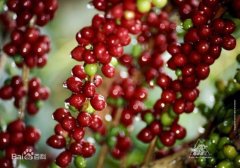
Tarrazu in Costa Rica is one of the major coffee producers in the world.
High-quality Costa Rican coffee is called extra hard beans, and this kind of coffee can grow at an altitude of more than 1500 meters. Altitude has always been a problem for coffee growers. The higher the altitude, the better the coffee beans, not only because the higher altitude can increase the acidity of the coffee beans and thus increase the flavor, but also because the night temperature at the higher altitude is lower, the trees can grow slowly.

Characteristics of Costa Rican coffee beans the origin of Costa Rican coffee beans
High-quality Costa Rican coffee is called extra hard beans, and this kind of coffee can grow at an altitude of more than 1500 meters. Altitude has always been a problem for coffee growers. The higher the altitude, the better the coffee beans, not only because the higher altitude can increase the acidity of the coffee beans and thus increase the flavor, but also because the night temperature at the higher altitude is lower, which can make the trees grow slowly.

Characteristics of Costa Rican coffee beans the origin of Costa Rican coffee beans
High-quality Costa Rican coffee is called extra hard beans, and this kind of coffee can grow at an altitude of more than 1500 meters. Altitude has always been a problem for coffee growers. The higher the altitude, the better the coffee beans, not only because the higher altitude can increase the acidity of the coffee beans and thus increase the flavor, but also because the night temperature at the higher altitude is lower, which can make the trees grow slowly.

Costa Rican coffee varieties Kadura, Kaduai
Full-bodied particles, ideal acidity, unique and intense aroma. Tarrazu, Costa Rica, is one of the world's leading coffee producers, producing coffee with a light, pure flavor and pleasant aroma. Costa Rica's volcanic soils are fertile and well drained, making it the first country in Central America to grow coffee and bananas for commercial value. Coffee and bananas are the country's staple foods.

Analysis of Vera Sachi Coffee brewing in Mima Manor, Costa Rica-introduction of Mima Manor Coffee varieties
Professional coffee knowledge exchange more coffee bean information Please follow the coffee workshop (Wechat official account cafe_style) when it comes to micro-batches, if you want to emphasize this concept, micro-batches are divided into two cases, simply: natural selection and human interference. Natural selection is a rare variety batch with low annual output but high quality, while human interference is in large yield batches.

Characteristics of Costa Rican coffee beans the origin of Costa Rican coffee fine coffee
High-quality Costa Rican coffee is called extra hard beans, and this kind of coffee can grow at an altitude of more than 1500 meters. Altitude has always been a problem for coffee growers. The higher the altitude, the better the coffee beans, not only because the higher altitude can increase the acidity of the coffee beans and thus increase the flavor, but also because the night temperature at the higher altitude is lower, the trees can grow slowly.

The planting method of Costa Rican coffee beans introduction of Costa Rican coffee beans
High-quality Costa Rican coffee is called extra hard beans, and this kind of coffee can grow at an altitude of more than 1500 meters. Altitude has always been a problem for coffee growers. The higher the altitude, the better the coffee beans, not only because the higher altitude can increase the acidity of the coffee beans and thus increase the flavor, but also because the night temperature at the higher altitude is lower, which can make the trees grow slowly.

Costa Rican boutique coffee brief introduction to Costa Rica
Costa Rican coffee has full grains, ideal acidity and unique strong aroma. Tarrazu of Costa Rica is one of the major coffee producing areas in the world. Costa Rica, with its fertile volcanic soil and good drainage, is the first country in Central America to grow coffee and bananas for commercial value. Coffee and bananas

Costa Rica Phoenix Estate Coffee Bean Flavor Description Grind Scale Variety Introduction
Other types of Brazilian coffee, such as Rio, Parana, etc., can be produced in large quantities without too much care. Although the taste is rough, it is a kind of inexpensive coffee. Because it is distributed all over the country, the solid quality varies, and there are its own standards (NO.2~NO.8 according to the amount of impurities, NO.13~NO.19 according to the size of beans, divided into six grades according to taste).

Full-grained Costa Rican coffee flavor introduces Costa Rican coffee producing areas
With fertile volcanic soil and good drainage, Dariga is the first country in Central America to grow coffee and bananas because of its commercial value. Coffee and bananas are the country's main exports. Coffee was introduced into Costa Rica from Cuba in 1729. Today, its coffee industry is one of the well-organized industries in the world, with a yield of 1700 kg per hectare. Gostad

Introduction to the characteristics of coffee flavor varieties of Fenghuang Manor in Costa Rica with ideal viscosity
Costa Rican coffee has full particles, ideal acidity and unique strong flavor. Costa Rica's coffee industry, originally controlled by the Costa Rican Coffee Industry Company (InstitutodelCafdeCostaRica, ICAFE), has been taken over by the official Coffee Committee (OficinadelCaf). In exported coffee, those products that are considered to be of substandard quality are used in blue.

Flavor description of Costa Rican boutique coffee beans introduction to the manor by grinding scale treatment
Tarrazu in Costa Rica is one of the major coffee producing areas in the world. The coffee produced is light and pure in flavor and pleasant in aroma. Costa Rica, with its fertile volcanic soil and good drainage, is the first country in Central America to grow coffee and bananas for commercial value. Coffee and bananas are the country's main exports. In 1729, coffee was introduced from Cuba to Goth.

Unique strong flavor of Costa Rican coffee taste characteristics of boutique coffee beans
Other Costa Rican coffees worth mentioning are Juan Vinas,PR, H.Tournon, Windmill,SHB, Monte bello and Ssnta Rosa. Fine Costa Rican coffee is generally grown in Geredia and the central canyon. Another eye-catching Costa Rican coffee is sa

Costa Rican Coffee Origins Costa Rican Coffee Practices
Full-bodied particles, ideal acidity, unique and intense aroma. Tarrazu, Costa Rica, is one of the world's leading coffee producers, producing coffee with a light, pure flavor and pleasant aroma. Costa Rica's volcanic soils are fertile and well drained, making it the first country in Central America to grow coffee and bananas for commercial value. Coffee and bananas are the country's staple foods.

Costa Rican Coffee Origins Costa Rican Coffee Practices
Full-bodied particles, ideal acidity, unique and intense aroma. Tarrazu, Costa Rica, is one of the world's leading coffee producers, producing coffee with a light, pure flavor and pleasant aroma. Costa Rica's volcanic soils are fertile and well drained, making it the first country in Central America to grow coffee and bananas for commercial value. Coffee and bananas are the country's staple foods.

Costa Rican Coffee Origins Costa Rican Coffee Practices
Full-bodied particles, ideal acidity, unique and intense aroma. Tarrazu, Costa Rica, is one of the world's leading coffee producers, producing coffee with a light, pure flavor and pleasant aroma. Costa Rica's volcanic soils are fertile and well drained, making it the first country in Central America to grow coffee and bananas for commercial value. Coffee and bananas are the country's staple foods.

Rich flavor of Costa Rican Saint Roman Coffee Flavor Manor characteristics of boutique coffee
With fertile volcanic soil and good drainage, Dariga is the first country in Central America to grow coffee and bananas because of its commercial value. Coffee and bananas are the country's main exports. Coffee was introduced into Costa Rica from Cuba in 1729. Today, its coffee industry is one of the well-organized industries in the world, with a yield of 1700 kg per hectare. Gostad